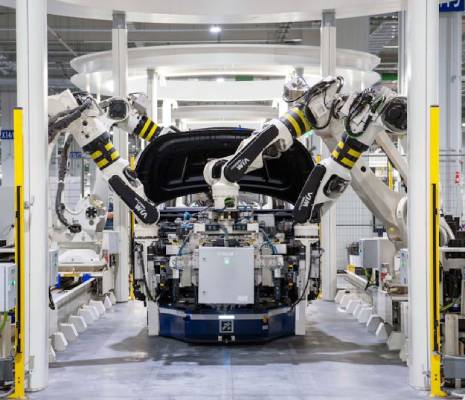
Automation revolutionizes industries by delivering sophisticated advantages in accuracy and productivity along with enhanced efficiency. Businesses implement automation solutions across their operations for operational improvements that reduce costs and, at the same time, create safer environments. Industrial automation solutions are vital within current economic structures because the market calls for growing numbers of connected, intelligent systems.
The Growing Need for Automation Solutions
Businesses need to implement automation solutions because it is the only way to retain industry competitiveness. As industries evolve, automation helps organizations:
- Improve efficiency – Machines operate faster than human labor, reducing time spent on repetitive tasks.
- Enhance accuracy – Automated systems minimize errors, ensuring higher quality control.
- Reduce costs – Automation decreases operational costs by optimizing resource usage and cutting down labor expenses.
- Increase safety – Smart systems prevent workplace accidents by handling hazardous tasks.
Types of Automation Solutions
The global industrial automation solutions market is projected to reach $395 billion by 2029, growing at a CAGR of 9.8%. Organizations select particular types of automation technology based on industry specifications. The most common solutions include:
1. Robotic Process Automation (RPA)
- What it does: Through its framework, RPA performs recurrent administrative work that covers data entry, order processing, and customer service tasks.
- Industries using it: Finance, insurance, healthcare, and retail.
- Example: RPA technology helps banks automate their loan application procedure, reducing approval duration from days to minutes.
2. AI-Driven Automation
- What it does: Machine learning algorithms operate on data to discover patterns as part of improved organizational decision systems.
- Industries using it: Manufacturing, marketing, and cybersecurity.
- Example: E-commerce platforms deploy AI chatbots across their operations to deliver continuous customer support service with a 60% speed increase benefit.
3. Industrial IoT (IIoT) and Smart Sensors
- What it does: IIoT allows machines to connect with a centralized system for real-time tracking and predictive equipment maintenance.
- Industries using it: Manufacturing, logistics, and energy.
- Example: Smart factory sensors monitor equipment performance, thus detecting industrial breakdowns before they happen.
Key Benefits of Implementing Automation
Cost Reduction and Resource Optimization
- Modern automated systems lower expenses tied to human work, therefore decreasing labor costs.
- A company achieves financial savings through decreased energy expenses and reduced material waste and lower maintenance costs.
Improved Workforce Productivity
- The workforce concentrates on advanced tasks because automation systems execute standard operations.
- The implementation of automation makes manufacturing operations faster and permits higher volume output without needing new workers.
Enhanced Quality Control and Safety
- Artificial intelligence algorithms built for defect detection help companies meet high levels of product quality standards.
- The utilization of smart robots allows businesses to carry out dangerous procedures safely, thus decreasing accidents on the job.
It has been shown that 85% of manufacturers believe automation will improve workplace safety by reducing human involvement in high-risk tasks.
Conclusion
The introduction of automated solutions for industry has brought operational efficiency, financial benefits, and safety improvements to operations. Businesses that adopt smart automation technology will dominate the evolving marketplace because of its contribution to both sustainability and enduring business success.
